How Great a Salvation! (Part 1 of 2)
Ministries > Truth For Life with Alistair Begg
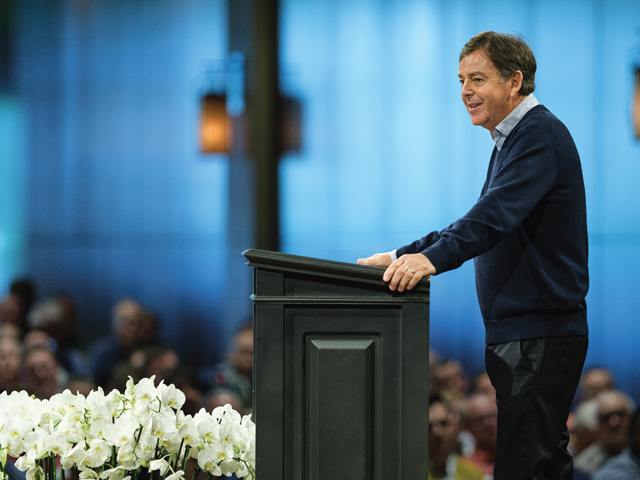
 Peter encouraged the scattered, oppressed, and persecuted early church to hold tight to the Gospel. On Truth For Life, Alistair Begg explains why the apostle’s message remains relevant today—and what it means to be “in the world yet not of the world.”
-----------------------------------------
• Click here and look for "FROM THE SERMON" to stream or read the full message.
• This program is part of the series ‘The Stranger’s Hope’
• Learn more about our current resource, request your copy with a donation of any amount.
Helpful Resources
- Learn about God's salvation plan
- Read our most recent articles
- Subscribe to our daily devotional
Follow Us
YouTube | Instagram | Facebook | X
This listener-funded program features the clear, relevant Bible teaching of Alistair Begg. Today’s program and nearly 3,000 messages can be streamed and shared for free at tfl.org thanks to the generous giving from monthly donors called Truthpartners. Learn more about this Gospel-sharing team or become one today. Thanks for listening to Truth For Life!
Bob Lepine: Welcome to Truth for Life. Bible teacher Alister Begg is beginning a study in 1st Peter today. The apostle wrote to encourage the early church to hold tight to the gospel at a time when they were scattered, oppressed, and persecuted. We'll find out why Peter's message remains relevant today and what it means for us to be in the world and yet not of the world.
Alistair Begg: I've never quite understood uh why it is that people who like myself enjoy murder mysteries or detective stories um go to the expense of purchasing a book and then out of impatience or curiosity or whatever else it is, they then go to the back of the book and they find out who done it. Um as a Scotsman, that is a dreadful waste of money and time. But if you're one of those people, perhaps you can explain to me afterwards what motivates that. Um however, that being said, one can make a fairly good case for taking that approach to our study of the Bible. And sometimes I say to the congregation, you know, we need to learn to read the Bible backwards. So, for example, if we go to the book of Revelation for um our encouragement, we know that the kingdoms of this world have become ultimately the kingdoms of our God and of his Christ, and he will reign forever and ever. That's a wonderfully reassuring and helpful um understanding of how everything ends. Um in a different way, but similarly, John in his gospel helps us when towards the end of chapter 20, he explains that although there were many more things that Jesus had said and done that could have been recorded, uh these have been written down, he says, in order that you might believe and that by believing you might have life in his name. And interestingly and helpfully, I found it that Peter does the exact same thing. And if you turn in your Bible just to the 12th verse of chapter 5, you realize how helpful it is that he tells us exactly what it is that he sets out as his plan and course of action in the course of these five chapters. And so I turned to it myself, uh you find that it is clearly there. Um the God, after you've suffered a little while, uh the God of all grace who has called you to his glory and so on, and then as he brings it to a close in his final greetings, he says, I have written briefly to you, exhorting and declaring that this is the true grace of God. Stand firm in it. So, he lets us know that everything that precedes in this discipleship manual, we might say, is in order that the readers are aware of the grace of God. He does the same thing interestingly in his second letter where he ends up by saying, I want you to take care that you do not lose your stability. And by the time we get to this particular point in history where he's writing this, he has, if you like, grown into his own name, grown into the name that Jesus gives him when he encounters him, as we find it at the beginning of John. And so we're introduced to him and to the readers. First of all, he introduces himself as an apostle of Jesus Christ. In a matter of just a few words, he identifies himself not in an individualistic way, but as part of a larger company. Um we read in the Gospels that Jesus had ordained uh the 12 that they might be with him and that then they may go out and preach the gospel. And Peter is identifying himself in that way, sent by the Lord Jesus in order that they might be proclaiming the good news of Jesus. And the word that they were delivering was God's word. That word which they then spoke, preserved for us uh in the scriptures, so that the written word is the very word that we were singing about in the previous song. It's important, I think, for us to recognize, especially in these days when all sorts of people call themselves apostles, that uh what we're dealing with is a unique identification of these individuals. And the message that they proclaimed was not their own. It wasn't as if somehow or another they got together and somebody interviewed them and said, I'm going to give you all five minutes each uh to tell people what the resurrection means to you, uh which is a very contemporary way of approaching things. Uh first of all, they needed to know what the resurrection meant, and then they needed to proclaim the truth of that. And of course, it mattered immensely to them. They spoke on the authority of the Lord Jesus Christ, the authority that is in the word of God itself, the authority that is given to the church in every generation. In my experience at the present time in the context of the culture as I understand it, there is a real tendency to lose confidence in the sufficiency and authority of the Bible itself. And whenever that has happened throughout history, then so many things have flowed from it. And it is important for us to remind ourselves of it. This apostle, Peter, is writing to these individuals who have been identified for us in these various parts of Asia Minor. The gospel had spread rapidly after the resurrection of Jesus, after the spirit of God had come. And by the time Peter is writing this letter, which I take to be sometime in the 60s, probably in the earlier 60s, there were these groups of individuals who were scattered throughout all these different districts. I take it that they are largely um Gentile congregations with um a number of Jewish people present among them. Although if you read the commentators, a lot of ink has been spilled deciding whether it's largely whether it's a largely Gentile congregation with a few Jewish people or whether it's a largely Jewish congregation with a few Gentile people. To which the average person says, does that really matter? And the answer is, well, it matters, but not as much as we might think it matters because Peter is writing to them not on the basis of what they were, but on the basis of what they are, that they are those who are identified in this particular way. I think the picture that we have of these flags around us here, and as I say, these different pictures and identifications of those who are serving uh around the world, give us something in our minds to to ponder. Scatterings of these little groups living in the context of pagan majorities. Now, just to say that, you realize what is different today, wherever we are. Uh the churches in our countries, whether it's here or in the States or in the United Kingdom or beyond, are really small gatherings of individuals called out by God who are living in an environment that is largely alien to them. Uh these individuals to whom Peter writes live in the world, but they do not belong to that world. Peter, when he writes this letter, would surely have in mind the occasion when before Jesus goes to the cross, he prays to the Father in John 17. And in doing so, he says to the Father, I have given them your word and the world has hated them because they are not of the world just as I am not of the world. And so Peter is writing to these individuals, to us as the readers of the text who are the elect, elect exiles or strangers or sojourners living in these various places. And they are the chosen of God. Now, the Old Testament picture of the people of Israel as called out by God, set apart to himself is now uh revealed in this new covenant fellowship. And he's going to mention that when he gets to chapter two. And these individuals, we, like them, find ourselves as sojourners um living in a real world amongst all of our friends and neighbors and yet moving towards a destination that has been picked out for us. I think it's important to see that the uh people of God are identified as exiles or strangers rejected by the world because they have been elected by God, uh set in the context of the family of God. And the way in which Peter puts it here is quite interesting, isn't it? According to the foreknowledge of God the Father. In other words, the active, creative work of divine love. Again, Peter writes this letter out of the fullness of all that he knew of Jesus on a personal level. He was present again when he heard uh Jesus explaining in John chapter six, all that the Father gives me will come to me, and whoever comes to me, I will never cast out. And so Peter recognizes the wonder of his own personal relationship with Jesus. And out of the fullness of that, he writes to encourage those who have been called into the family of God. John puts it wonderfully, doesn't he? When he says, this is love, not that we have loved God, but that he has loved us and made us his own. The hymn writer in the salvation song puts it poetically and briefly, loved before the dawn of time, chosen by my maker, hidden in my savior. I am his and he is mine, cherished for eternity. And that choice and purpose of God takes place through the ministry of the Holy Spirit, in the sanctification of the Spirit for obedience to Jesus Christ, for the sprinkling of his blood. It's interesting that he begins with sanctification. I take it that he's speaking about the way in which we are made the very dwelling place of God by the work of the Spirit, that the initial work in our lives is that we become his children so that we might live as the dwelling place of God. And that in doing so, we live in obedience to Jesus. And as a result of that, we are sprinkled, not as a result of that, but in keeping with that, we're sprinkled by the blood of Jesus. In other words, what God the Father has planned, um God the Son has procured, and God the Holy Spirit applies to our lives. When I was at Charlotte Chapel in Edinburgh almost 50 years ago now, that one of the assignments that was given to me was to teach 1st Peter as a discipleship class. And in the course of seeking to do that, one of the things we wanted to point out to those who had recently trusted in Christ that they were of each other identified as those who'd been chosen by God the Father, who had been sprinkled by the blood of Jesus Christ and who were sanctified by the Holy Spirit. And it is in the awareness of that that he then says to him, and grace and peace needs to be multiplied to you. Um the end in view for the Christian living in an alien world is to live according to the divine pleasure of God. And as we do so, we recognize that the sprinkling of the blood of Jesus is essential for us. And we have been cleansed and made new and we're different. Um Stibbs puts it quite wonderfully when he says, it is noteworthy that the sprinkling of the blood is mentioned last, possibly suggesting that the cleansing virtue of Christ's blood is available and will be needed to the end of our earthly pilgrimage. Our calling is to obey, but when we fail, the atoning blood can still be sprinkled. Essentially, as he sets his course in the the letter, he is making it perfectly clear that the people will understand who it is, where they belong, and to whom they belong. In the 1970s in um the States and elsewhere, there were a number of musicals that uh emerged on the scene. And they were written uh along the lines of I suppose a Christianized version of Godspell. And I remember that they came to London in the early '70s. And one of the songs that they sang in this musical um goes like this. You are the children of the kingdom of God. You're the chosen ones for whom the savior came. You're his noble new creation by the Spirit and the blood. You're the church that he has built to bear his name. And I suppose one of the things that would be essential to the folks as they became the recipients of this letter is to be reminded of the fact that who they are and what they are is an account of the eternal purposes of God, that before the dawning of time, again as we've sung so helpfully, before all of that in a way that is beyond our ability to fully comprehend that God has called out a people for himself and that it is the utterly undeserved privilege of all who are in Christ to be included in that group. And so he says, may then grace and peace be multiplied to you. The riches of God at the expense of Christ, may they be poured out upon you. And may the peace uh you will keep him in perfect peace whose mind is stayed on you because he trusts in you. And then being justified by faith, we have peace with God. May that be multiplied to you. Now, that's all by way just of these opening couple of verses. Here we have it. Peter, the writer, the recipients scattered as they are, marked by these three things and the the under on the encouraging uh end of this letter that is about to follow. Now, let's just pause and acknowledge that um we are not in Cappadocia, uh nor are we in Bithynia, at least as far as I know, but we're in Australia. And we are studying 1st Peter in a very different place from the context in which these individuals were living. The abiding word of God is relevant in every place and in every context. But having grown up in the church largely and having been on the receiving end of um Bible talks from different people over the years of my life to my benefit, I have observed that in passages such as this, and I mean the whole book, it's not uncommon, at least it hasn't been uncommon for people to say, you know, uh the this um suffering about which Peter is about to speak, this fiery trial and so on, um we don't really know very much about that. Uh we we we think there may be a day that is coming when we will experience something along these lines. And so it was always sort of hedged about, it must be for the missionary world or whatever else it is. But insults, the pushback of a culture, uh at least in the '60s and '70s, uh the people said, well, that's largely unknown. But it's not the '60s and '70s anymore. It's now the world in which we're living. I think it's pretty fair to say we are beginning, we have begun to get a much greater understanding of what it means to live as strangers and what it means then to have a hope that stands beyond the test of time, that is able to face the challenges of life, the difficulties, the disappointments, and so on of everyday existence in a way that is markedly different. Carl Truman in one of his books acknowledges what I'm suggesting. He says, the era when Christians could disagree with the broader convictions of the secular world and yet still find themselves respected as decent members of society at large. That era is coming to an end, if indeed it has not ended already. Many of us are now living as strangers in a strange new world. And Peter is going to go on and make more of this in chapter two, but we're not there at chapter two. And I want us just to follow the outline of what follows. And uh Peter here is providing us with essentially a doxology, a song of praise. This is if you're like Peter's version of uh Paul's opening long, long sentence in Ephesians chapter one. And he is marveling at the wonder of God's grace in salvation. And so that is exactly what he mentions. And that's why I gave as our title for this, how great a salvation. And you will see how he begins. Blessed or praised be to the God and Father of our Lord Jesus Christ. Because according to his great mercy, he has caused us to be born again to a living hope through the resurrection of Jesus Christ from the dead. Let's just stop there for a moment on that word mercy, mercy. In other words, God acts towards us in accordance with his character and with his resources. And the word actually assumes need on the part of ourselves as recipients and pity and compassion and provision on the part of the giver. Now, when you think about uh mercy, it's a word that is not often uh in everyday language, I don't think. Every so often, somebody who is a school principal or something has to subject herself or himself to having their photograph taken for the annual report. And depending on uh the person, uh when the photographer comes, they may say to them, uh now as you do this for me, um I I hope that you you will um do me justice um because I I if it's good, then I'm going to give it to a few of my friends as well. And the photographer's been around for a long while looking at the person, looking at me says, uh Begg, what you require is not justice, but mercy. You require mercy. If I give you justice, uh you will not like that. And of course, we we understand this uh Porsche to to Shylock, if you remember from school, though justice be thy plea, consider this that in the course of justice, none of us should see salvation. We do pray for mercy, mercy. All the love that drew salvation's plan, all the grace that brought it down to man, all the mighty gulf that God spanned at Calvary. Mercy there was great and grace was free. One of the one of the aspects of somebody who has really been grasped by this is a humility of heart, is is an awareness of the fact that there is there is a dimension to the reality of our existence in Christ that is so up there and so beyond us and yet so precious to us at the same time. It leaves us with no basis upon which to go into our environment, into our world and be anything other than aware of the fact that the only thing that distinguishes us from our unbelieving neighbors is the mercy of God. That were it not for the fact of God's grace and mercy, uh we would not be distinguishable in any way at all. Uh it's important and I'm so excited about all these children along with you um because I am the beneficiary of people who were prepared to do what these young folks that we've just seen here have done. And it was a tremendous help to me as a youngster uh to be reminded of those three tenses of salvation so that they taught me, I have been saved from sin's penalty. I am being saved from sin's power. And one day, I will be saved from sin's presence. And the reality of it is on accordance with on the basis of the reality of God's mercy.
Bob Lepine: You're listening to Truth for Life with Alister Begg. We'll hear more about God's ongoing plan of salvation tomorrow. Here at Truth for Life, we are passionate about sharing the gospel. And with Christmas, not too far in the distance, we would love for you to join us in that mission. If you are an early shopper, our online store is filled with books that make valued gifts, gifts that lead others to Jesus. And when you visit truthforlife.org/gifts, you'll find colorful picture books for children, a large print Bible, devotionals, beautiful leather-bound Puritan prayer book, evangelism books, and more. There's something for everyone on your list, and all of them are available at cost. We do this so you can buy for the whole family for less than $100. So, please take advantage of these high quality, low cost books. And if you're able, consider adding a donation at checkout. Your giving supports our gospel sharing mission. As a listener funded ministry, we rely entirely on your generous support to produce and distribute Alister's teaching and to offer books and Bible studies for free or at cost. Again, you can shop and donate at truthforlife.org/gifts. I'm Bob Lepine. We're glad you studied God's word with us today. Do you ever worry that you might not persevere in the faith all the way to the end? Join us tomorrow for an encouraging assurance for all believers. The Bible teaching of Alister Begg is furnished by Truth for Life where the learning is for living.
Related Episodes
How Great a Salvation! (Part 2 of 2)
Tuesday, November 10
We Do Not Lose Heart (Part 4 of 4)
Saturday, November 7
The Beatitudes from Fifty Thousand Feet (Part 2 of 2)
Friday, November 6
About Truth For Life
Truth For Life distributes the unique, expositional Bible teaching of Alistair Begg. Studying God’s Word each day, verse by verse, is the hallmark of this ministry. In a desire to share the good news of the Gospel without cost as a barrier, the entire teaching archive is available for free download and resources are available at cost with no markup.
About Alistair Begg
Alistair Begg has been in pastoral ministry since 1975. Following graduation from The London School of Theology, he served eight years in Scotland at both Charlotte Chapel in Edinburgh and Hamilton Baptist Church. In 1983, he became the senior pastor at Parkside Church near Cleveland, Ohio. He has written several books and is heard daily and weekly on the radio program, Truth For Life. The teaching on Truth For Life stems from the week by week Bible teaching at Parkside Church. He and his wife, Susan, were married in 1975 and they have three grown children.Contact Truth For Life with Alistair Begg
Website
http://www.truthforlife.org/?utm_source=oneplace&utm_medium=sitelinks&utm_campaign=home
Mailing Address
Truth For Life
P.O. Box 398000
Cleveland OH 44139
Telephone (Customer Service)
888-588-7884 Domestic
400-543-6800 International
440-543-0522 ( Fax)


