The Life of The Party - Part 2
Ministries > Unlimited Grace with Bryan Chapell
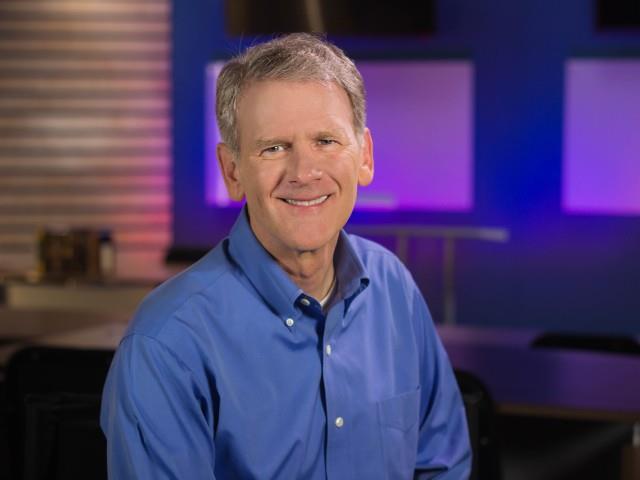
Pastor Bryan shares the second half of a lesson from John 2. Dr. Chapell highlights the miracle of Jesus turning water into wine, with a message that God provides blessing to His people.
Bryan Chapell: You sought the other things of the world. You sought the things externally that you thought would satisfy, and even having received them, found them empty and futile and vain. And what God was doing was taking you to the end of yourself and saying it's not the external things. It's what is inside of you that is going to make you know the happiness and the contentment. And that is ultimately through a relationship with me, not your relationship with the things of the world.
Guest (Male): So glad you joined us for today's Unlimited Grace. The audio broadcast ministry of pastor and author Bryan Chapell. In today's episode, Pastor Bryan shares the second half of a lesson from John chapter 2. Dr. Chapell highlights the miracle of Jesus turning water into wine, with a message that God provides blessing to his people. You can find this lesson and many others when you visit unlimitedgrace.com. And while you're there, look for Pastor Bryan's book, The Multi-Generational Church Crisis. This compelling book asks the question of the church, what could be accomplished in the name of Christ, if we could better understand each other. Let's hear now from Dr. Bryan Chapell as he shares the second half of the lesson, The Life of the Party.
Bryan Chapell: Last week, we got John the Baptist introduction to Jesus and said, "He is the Lamb of God who takes away the sin of the world." There is the declaration that Jesus will be the Lamb sacrificed, and three days later, he manifests his glory. What is John asking us to remember in this gospel? He's revealed to be the Lamb of God and three days later, he manifests his glory. What are you thinking of? The crucifixion and the resurrection. It's what John is doing. He's putting together the themes so that we will understand what God is communicating. And that's precisely what is happening here in the wedding feast at Cana where Jesus turns the water into wine. It's not just a miracle for aha, it is a miracle to say, "You're now going to know who he is by what happens here." Let's stand for the reading of God's Word as we honor the word given to us by the Holy Spirit. John chapter 2, verses 1 through 11. "On the third day, there was a wedding at Cana in Galilee, and the mother of Jesus was there. Jesus also was invited to the wedding with his disciples. When the wine ran out, the mother of Jesus said to him, 'They have no wine.' And Jesus said to her, 'Woman, what does this have to do with me? My hour has not yet come.' His mother said to the servants, 'Do whatever he tells you.' "Now, there were six stone water jars there for the Jewish rites of purification, each holding 20 or 30 gallons. Jesus said to the servants, 'Fill the jars with water,' and they filled them up to the brim. And he said to them, 'Now draw some out and take it to the master of the feast.' So they took it. When the master of the feast tasted the water now become wine and did not know where it had come from, though the servants who had drawn the water knew, the master of the feast called the bridegroom and said to him, 'Everyone serves the good wine first, and when people have drunk freely, then the poor wine. But you have kept the good wine until now.' "This, the first of his signs, Jesus did at Cana in Galilee, and manifested his glory, and his disciples believed in him." Why would you yield everything to Jesus? Because he's not just in the grace business. He's also in the joy business. I mean, that's his ultimate end, even in this account. You recognize it, don't you? Even though he doesn't answer the way Mary is expecting right off the bat, he does answer to bring joy. And if you will, in the parabolic nature of this account, where he's signing in small letters what he's actually going to do in large script later on. You recognize that what is being provided is joy of great quantity, and also joy of great quality. The quantity is indicated in the fact that there are these six stone water jars. The Gospel writer takes care to say, "Filled to the brim." 20 or 30 gallons, their size, each of them, and they are filled to the brim with water, and Jesus turns it all into wine. Now, you know, we're in an evangelical culture, so we don't often perceive it from a Jewish perspective. But for a Jew, this abundance of wine is a signal of great blessing. I mean, I remember, you know, watching a cooking show one time and the chef trying to justify his use of the wine, saying, "This is actually given by God." What? "Because it says in the Bible," he said, "God gives us bread to make us strong, oil to make our faces shine, and wine to make our hearts glad." I said, "That's not in the Bible." But it is. Now, some of you are thinking right now, "No, it's not." And others of you are thinking, "What's he doing watching a cooking show?" The message of the account is that God is bringing great blessing to his people. But it's not just quantity, it's quality. Now, part of that quality being expressed is, of course, the wine master saying that this was the best wine, even though it came at the end of the feast where you expect the people who had had too much to drink not to notice. And yet the wine steward, this master of the feast, the MC, is saying, "This is the best stuff." But that's not the quality that Jesus is wanting us to see in the business card that's indicating so much more about what will happen. The quality that's actually being expressed is being expressed not in the quality of the wine, but in where it comes from. Remember, they were ritual stone jars for what? For purification rituals. Because in Jewish custom, even at these wedding ceremonies, you had to go through all these purification rituals. Remember, we talked about it last week, what Jesus sometimes got in trouble for not doing, for washing his hands and his disciples' hands before they ate, or washing the pots and pans, or quote-unquote, baptizing the tables, all that language of the scriptures, they were not doing the ceremonial washings that was being expected. But here at the wedding, all the water is there for the ceremonial washings that were to externally purify. And now Jesus takes that water, intended for external purification, and he turns it into wine that is going to be taken internally, and signify something far greater. For you will remember that in a few more months, he will say of the wine that he gives, "This cup is the new covenant in my blood that is shed for many for the remission of sins." There is purification that will occur, but the purification that will occur will be through his blood signified by this wine. God is saying, through his Son in this account, you are looking for external things to make you right. You are looking for external things to make things right between you and God. But ultimately, what God is calling for is that which is internal. He is talking to people who know sin and shame and saying what you must trust is not the external things that you think will make you right before God. It is your hearts that must be set right, and that is done by something internal. It is done by something that is through blood, and it is done by this one who is able to take water and turn it into the wine that signifies what he will do to purify humanity forever. We don't remember at times. But if we would ask anything, and at the same time, yield everything, we would recognize that what we're ultimately asking God to do is make us right on the inside, not so much from the outside. Some of you will know that prayer from an unknown Civil War soldier in which he expresses what it would mean to actually not trust the external, but find the internal. The prayer, "I ask God for strength that I might achieve. I was made weak that I might learn humility. I ask God for health that I might do greater things. I was given infirmity that I might do better things. I ask for power that I might know the praise of men. I was given weakness that I might know the heart of God. I ask for all things that I might enjoy life. I was given His life that I might enjoy all things. I got nothing that I asked for, but everything that I hoped for. Despite myself, my prayers were answered. I'm among all men most blessed." Some of you know exactly what I'm talking about. That you sought the other things of the world, you sought the things externally that you thought would satisfy, and even having received them, found them empty and futile and vain. And what God was doing was taking you to the end of yourself and saying, "It's not the external things. It's what is inside of you that is going to make you know the happiness and the contentment. And that is ultimately through a relationship with me, not your relationship with the things of the world." It's not the external things that are going to satisfy. It is something inside. You need His life, His provision, His blood that takes away guilt and shame and ultimately tells you that whatever comes because you're with Him now, you can take it, you can face it. Isn't that true? If you knew you were with Jesus, you could face anything. But what God is calling you to deal with at this moment, sometimes is kids in terrible positions, a marriage in terrible shape, a career that's in shambles, a future that's uncertain. And to say, but if you're with Him, if you're with Him, you can deal with this because He's not just in the grace business. He is in the joy business, and the way that He brings that ultimate fulfilling joy is by a relationship with Him.
Guest (Male): You're listening to Unlimited Grace, the audio broadcast ministry of pastor and author Bryan Chapell.
Guest (Male): It may seem hard for younger Christians to believe, but people over 50 were raised during an era when 90% of Americans identified as Christian. These older believers were once part of a majority group that understood the mission of the church was to take control of our culture, to halt its evils. At the same time, Christians under 50 have lived their entire lives perceiving themselves as a minority that needs to make credible their faith to a secular pluralistic culture. These distinct experiences and perceptions have a profound impact on the priorities different generations have for church ministry. It's no wonder that younger and older believers don't always see eye to eye. In his new book, The Multigenerational Church Crisis, Dr. Brian Chapell asks the question, what could be accomplished in the name of Christ, if we could better understand each other? This practical and hopeful book is backed by thorough research, revealing how to open the lines of communication, appreciate the experiences that shaped each generation in your church, and unite in one mission to impact your community and the world. You can request your copy of The Multigenerational Church Crisis when you donate online at unlimitedgrace.com or by calling 844-41-GRACE. That's 844-414-7223. And now, more from Brian Chapell on today's Unlimited Grace.
Bryan Chapell: What Jesus did is he sanctified marriage by his presence at the wedding in Cana of Galilee. But what I recognize and you should recognize he's doing, he's not just sanctifying that wedding. He is sanctifying his wedding. Saying what I ultimately desire on this business card with the little writing is is the mission in large scope, which is to be united eternally with a people, heart to heart, life to life, eternity with everything. I desire to be married to you. It's it's what God says over and over again in the scriptures. Presenting the people as the bride and himself as the bridegroom, who is working for a heart unity that enables us to face anything because we are united to him. Now, you may not see that because we don't recognize all that is going on in the way that John is writing because it's not in English, Western, United States terms. But if you were a Jew, you would understand this was the first of the signs that Jesus did to manifest his glory, says John, Now the first of the signs. What what are what are the function of signs? If I just tell you some of their sequence in the Gospel of John, you'll get it immediately. Okay? When when Jesus took the five loaves to feed 5,000, it immediately preceded his teaching that he was the bread of life. When he took the man born blind and gave him his sight, it was immediately preceding the teaching, I am the light of the world. When Jesus raised Lazarus from the dead, it was immediately preceding the teaching that I am the what? The resurrection and the life. The sign carries spiritual significance much broader. And if you were a Jew at the time of this writing of what happened at the wedding feast at Cana, what what you are not going to be doing is debating whether or not Jesus should have made water into wine. What you're going to be doing is saying, "I get it. John is telling me who Jesus really is." Because he is the fulfillment of prophecy and the foreshadowing of promise according to the scriptures. If you want to think what a Jew would be thinking about when he learned that Jesus turned water into very fine wine, you have to go back to Isaiah 25. Isaiah 25 is describing the prophecy of the coming Messiah to rescue a people who've been in rebellion and are suffering. And now God is saying when I send the Messiah, there are certain things that are going to identify who he is. Verse 6 of Isaiah 25, "On this mountain," that is in the Holy City of God, "the Lord of Host will make for all peoples a feast of rich food, a feast of well-aged wine. A rich food full of marrow of aged wine, well refined." Here is the statement of when he comes, he's going to provide feasts which include this this great wine. You say, "Well, okay, maybe." I mean, it's great that Jesus provided wine in that way, but that's not all that Isaiah says in anticipation of the Messiah. If you'll go on in verse 7 of Isaiah 25, it says, "And he will swallow up on this mountain," now that actually is the word for a death shroud. "He is going to swallow up the death shroud that is cast over all peoples." You say, "Well, actually, that's not in John 2." True. But John isn't finished telling the story. If you've got your Bibles still open, go to John 4 and verse 46. Because in John 4 and verse 46, John records that Jesus goes back to Cana. The very place where the water was turned to wine, very fine wine. And you may remember in John 4 and verse 46, that we are told at that point that Jesus came again to Cana in Galilee where he had made the water wine. And you remember what happened there? There was an official who came to him and said, "My son is dying." And Jesus said to him, "Go home. Your son will be well." And the official goes back home, and on the way home, he meets his servants who are coming to tell him that his son has actually been made well. And when the official says, "At what hour? When did he get well?" And the servants say the hour, it was exactly the same hour that Jesus said, "Your son will be saved from death." Oh, but you say, "Well, wait, wait a second, okay, now maybe he took away the death shroud, but that's not all it says." It says in Isaiah 25:7, "He will swallow up on this mountain the covering that is cast over all peoples." I mean, the swallowing up of death wasn't just supposed to be for Jews anymore. You know where I'm going, don't you? It was not a Jewish official. What kind of official came and asked Jesus for help with his dying son? A Roman centurion. As the death was being swallowed up, not just for one, but for all peoples. Oh, but you say, "That's not all that Isaiah says." Finally, Isaiah says this, "He, this coming Messiah, will swallow up death forever, and the Lord God will wipe away tears from all faces." Oh, John didn't say that in John 2 or John 4. But John hasn't finished telling the story. There is another book in the Bible that John wrote. What is it? Revelation. And in the Book of Revelation, you may remember that what John tells us is there will be one more great wedding feast. It will be the wedding feast of the Lamb. Where this same Jesus, the one has been declared in this very book to be the Lamb of God who takes away the sin of the world, will invite all peoples to the wedding feast of the Lamb. And what will happen then? Death will be swallowed up forever because John says, "I saw the holy city of God descending from heaven as adorned as a what? A bride for her husband." And at that point, what will happen? God will wipe away all tears from their eyes. This Jesus, this Lamb is going to wed his people forever, and by changing their hearts, their spirits, their souls forever, it will be an eternal swallowing up of death. In our wedding ceremonies, we say in sickness and in health, in plenty and in want, till death do us part. But the wedding supper of the Lamb says in sickness or in health, in plenty or in want, in sin or in shame, and never shall death part us. This is the promise of the wedding of this one who has presented his business card small so that we will know the plan large. As profound as can be the joy of a man and a woman made one, so is God saying is even more profound what happens when the soul of a man or woman is made one with Jesus by the shedding of blood that takes away guilt and shame so that we are united to an eternal God forever. And that is the plan. Because he is in the wedding business. And when you know that, when you know that despite health or sickness, plenty or want, sin or shame, you can be one with this Christ, this Jesus, now and forever, the promises of eternity begin to enrobe into the present and you say, "As hard as this may be, I still can know joy because I know the future, I know the plan, and I know what is ahead. God has made me one with himself by the work of his Son." That's the wedding that you're being invited to right now. Earlier in this service, I actually asked that we sing Blessed Assurance, written by Fanny Crosby, America's most prolific hymn writer. She wrote over 8,000 hymns. Blinded at the age of six weeks due to a mistake from a doctor and lived to be 95 years old. All that time, blind and and writing of the grace and the goodness. How could she do that? Because she said, "I have learned the depth and the wonder of his grace through my blindness." Late in her life, she was asked, "If you could be given your sight, how would that change your life?" And her response was simple. "If someone were to offer me my sight, I would not accept it. God has done me no harm. By taking away my sight, I have been taken away from the distractions of the pleasures of this world, and God has shut me in with Jesus. And there I have known such joy of his grace that I would never part of it even for my sight." I don't know the challenges you face, the hurt or the pain, but this I know, if you could face it with Jesus, you could face anything. Ask him what you need. Trust him to take care of it. He will be with you and take you through it.
Guest (Male): That's Pastor Bryan Chapell, and you've been listening to Unlimited Grace. Please be sure to join us next time as once again, we endeavor to put Christ at the center of our efforts so that lives might be transformed by His unlimited grace. This ministry is brought to you by Unlimited Grace Media and continues to be made possible with your generous financial support.
Related Episodes
The Life of The Party - Part 1
Wednesday, September 23
Make Way For The Lamb - Part 2
Tuesday, September 22
Make Way For The Lamb - Part 1
Monday, September 21
About Unlimited Grace
Unlimited Grace is dedicated to spreading the gospel of God’s grace to all people. We desire for believers everywhere to serve God through faith in His grace that frees from sin and fuels the joy of transformed lives.About Bryan Chapell
Bryan Chapell, Ph.D. is the Stated Clerk Pro Tempore of the Presbyterian Church in America (PCA), based in Lawrenceville, GA.
Dr. Chapell is an internationally renowned preacher, teacher, and speaker, and the author of many books, including Each for the Other, Holiness by Grace, Praying Backwards, The Gospel According to Daniel, The Hardest Sermons You’ll Ever Have to Preach, and Christ-Centered Preaching, a preaching textbook now in multiple editions and many languages that has established him as one of this generation’s foremost teachers of homiletics.
Dr. Chapell is passionate about sharing the truth of God's grace with others, because it provides the freedom and fuel for transformed lives of joy and peace.
He and his wife, Kathy, have four adult children, a growing number of grandchildren, and lives rich with friends, fishing and faith.
Contact Unlimited Grace with Bryan Chapell


